Feasibility Study
Feasibility Studies Kenya
Feasibility studies Kenya are an essential first step for investors and developers who want to understand the potential of a real estate project before committing substantial capital. At GIMCO Limited, we examine the market, location, development concept, costs, demand, revenue potential and investment risks surrounding a proposed project to determine whether the opportunity is worth pursuing. Our analysis gives property investors, developers, landowners and institutions the information they need to make confident, evidence-based decisions.
What Is a Feasibility Study?
A feasibility study is a detailed assessment undertaken before a proposed project is developed to determine whether the project is practical, commercially viable and financially achievable. In real estate, it provides investors and developers with a structured evaluation of the factors that can influence the success or failure of a proposed development. For reliable market information, developers can also refer to data published by the Kenya National Bureau of Statistics (KNBS).
Rather than proceeding with a project based on assumptions, a feasibility study brings together market research, location analysis, development costs, revenue projections, financial analysis and risk assessment to provide a clearer picture of the investment opportunity.
For a property investor, this could mean assessing whether a proposed apartment development is likely to attract enough buyers or tenants at the anticipated prices. For a commercial developer, it could involve determining whether there is sufficient demand for office, retail or industrial space in a particular location. For a landowner, a feasibility assessment can help determine whether the proposed use of the property represents a viable development opportunity.
A comprehensive feasibility study therefore helps answer an important question:
Is the proposed project worth pursuing, and what needs to be considered before investing?
Market Demand
Understanding market demand is one of the most important components of a feasibility study. A development may look attractive on paper, but if there is insufficient demand for the finished property, the project could struggle to generate the expected returns.
The assessment examines the characteristics of the intended market and considers factors such as the target customers, population trends, income levels, consumer preferences, existing demand and emerging market opportunities.
For residential developments, this may involve assessing demand for apartments, townhouses, maisonettes, affordable housing or serviced apartments. For commercial projects, the analysis may consider demand for office space, retail premises, warehouses or other commercial facilities.
Understanding market demand helps ensure that the proposed development is aligned with what potential buyers, tenants or users actually need.
Competition
A feasibility study also examines existing and planned developments that may compete with the proposed project.
Competitive analysis can consider:
- Similar properties in the area
- Property prices
- Rental rates
- Occupancy levels
- Unit sizes and configurations
- Amenities and facilities
- Location advantages
- Target customer segments
- Strengths and weaknesses of competing developments
This analysis helps investors understand how their proposed project could be positioned within the market.
For example, if several similar apartment developments already exist in an area, simply constructing another development may not provide the expected returns. The project may need a different unit mix, pricing strategy, location advantage or unique value proposition to compete effectively.
Development Costs
Understanding the total investment required is another critical element of a feasibility study.
Development costs can include much more than the cost of constructing the building. Depending on the project, the assessment may consider:
- Land acquisition costs
- Site preparation
- Construction costs
- Infrastructure and utilities
- Professional consultancy fees
- Architectural and engineering services
- Statutory approvals and related costs
- Financing costs
- Marketing and sales expenses
- Project management costs
- Operating requirements
- Contingency allowances
A realistic assessment of development costs helps investors establish how much capital may be required to complete the project.
It can also highlight areas where costs could potentially affect profitability and whether the proposed development remains financially attractive after all major expenses are considered.
Revenue Potential
A project must have a realistic revenue model to support its investment case.
Depending on the type of development, revenue may be generated through property sales, rental income, commercial leases, hospitality operations or other property-related income streams.
For a residential development intended for sale, a feasibility study may assess potential selling prices, the expected rate at which units could be sold and the likely demand for different unit types.
For a rental development, the assessment may consider achievable rental rates, occupancy levels, operating expenses and potential rental income.
For commercial property, the analysis may examine market rental rates, tenant demand, vacancy levels and the potential income that could be generated from the available space.
Revenue projections should be based on realistic market evidence rather than overly optimistic assumptions. This is important because overstated revenue can make an otherwise weak project appear profitable.
Investment Requirements
A feasibility study helps establish the level of investment required to move a project from concept to completion.
This may include the initial cost of acquiring land, funds required for construction, professional fees, statutory costs, financing requirements, marketing expenses and working capital.
Understanding the investment requirement allows investors to assess whether they have sufficient capital to proceed or whether additional financing or investment partners may be required.
For larger developments, the analysis can also help investors understand how capital may need to be deployed throughout the different stages of the project.
This provides a clearer picture of the financial commitment involved before the development begins.
Making an Informed Investment Decision
Ultimately, a feasibility study brings these different areas of analysis together to provide an overall assessment of a proposed project.
The findings can help an investor or developer decide whether to:
- Proceed with the proposed development
- Modify the development concept
- Change the target market
- Review the proposed pricing
- Consider an alternative use for the property
- Adjust the investment strategy
- Conduct further research
- Delay the project until market conditions improve
- Or decide not to proceed
This makes a feasibility study an important decision-making tool rather than simply a report.
For investors considering property development in Kenya, obtaining an independent assessment before committing substantial capital can provide valuable insight into the opportunity, potential returns and risks involved.
At GIMCO Limited, our feasibility studies are designed to give investors, developers, landowners and institutions the information they need to evaluate real estate opportunities and make informed investment decisions.
Investment and Project Risks
Every real estate investment carries some level of risk, and identifying these risks before committing significant capital is an important part of feasibility analysis.
Potential risks may include:
- Lower-than-expected market demand
- Rising construction costs
- Changes in property prices
- Financing challenges
- Delays in development
- Increased competition
- Changes in economic conditions
- Regulatory or approval requirements
- Construction and operational risks
- Changes in consumer preferences
A feasibility study helps identify these potential challenges and allows investors to consider appropriate strategies for managing them.
The purpose is not to eliminate every risk something that is rarely possible in real estate but to ensure that investors understand the risks they are taking and can make informed decisions about whether the potential opportunity justifies them.
Why Conduct a Feasibility Study Before Investing?
A feasibility study provides investors and developers with a structured basis for evaluating a proposed project before significant time and capital are committed. It helps transform an initial idea into a clearly defined investment opportunity by examining the market, financial requirements, potential returns and associated risks.
For property investors and developers in Kenya, a feasibility study can provide the following benefits:
1. Gives Focus to the Project
A feasibility study gives a proposed project clear direction from the beginning. It helps define the project’s objectives, target market, development concept, location requirements, financial expectations and implementation considerations.
Instead of proceeding with a general idea, investors can establish what they want to develop, who the development is intended for and what conditions need to be met for the project to be viable.
2. Narrows Business Alternatives
A property or piece of land may have several potential development options. For example, a site could potentially be used for residential apartments, offices, retail space, a mixed-use development or another commercial purpose.
A feasibility study evaluates these alternatives against factors such as market demand, development costs, revenue potential, competition and investment returns. This allows investors to narrow down the available options and concentrate on the development concept with the strongest potential.
3. Identifies Opportunities
Research undertaken during a feasibility study can reveal opportunities that may not be immediately obvious to an investor.
Market research may identify underserved customer segments, emerging demand, changing consumer preferences, infrastructure improvements or gaps in the existing property market. These insights can help investors identify opportunities for developing properties that respond to actual market needs.
4. Identifies Reasons Not to Proceed
A feasibility study is not designed simply to justify an investment. One of its most valuable functions is to identify circumstances in which proceeding with a project may not be advisable.
The assessment may reveal insufficient demand, excessive competition, high development costs, limited revenue potential, financing challenges or other risks that could negatively affect the project.
Identifying these issues early can prevent investors from committing substantial capital to a project that may not deliver the expected results.
5. Enhances the Probability of Success
No feasibility study can guarantee that a project will succeed. However, conducting proper research and analysis can reduce uncertainty and improve the quality of the decisions made before development begins.
By understanding the market, assessing the location, evaluating costs, analysing potential revenue and identifying risks, investors can make appropriate adjustments to the project before committing significant resources.
This may involve changing the development concept, adjusting the unit mix, revising pricing assumptions, modifying the target market or considering an alternative use for the property.
6. Provides Quality Information
Real estate investment decisions should be based on reliable and relevant information rather than assumptions.
A professional feasibility study brings together information about the property, location, market conditions, competition, development requirements, costs, potential revenue and investment risks.
Having this information in one structured assessment allows investors and decision-makers to evaluate the project more objectively and understand the factors that could influence its performance.
7. Helps Secure Funding
A well-prepared feasibility study can support discussions with banks, financial institutions and other potential project financiers.
Lenders and other financial stakeholders need to understand the viability of a proposed project before considering financing. Information about the market opportunity, development costs, projected revenue, financial performance and potential risks can help demonstrate how the project is expected to perform.
While a feasibility study does not guarantee approval for financing, it can provide important supporting information when presenting a project to potential financiers.
8. Helps Attract Equity Investment
For projects that require additional investors or equity partners, a feasibility study can help communicate the investment opportunity in a clear and structured manner.
Potential equity investors typically want to understand the project’s market potential, required investment, financial projections, risks and potential returns before committing capital.
A professionally prepared feasibility assessment provides a foundation for these discussions and can help investors evaluate whether the proposed project aligns with their investment objectives and risk expectations.
Make Better Investment Decisions Before You Commit Capital
Ultimately, the value of a feasibility study lies in better decision-making. It helps investors understand both the potential opportunities and the challenges associated with a proposed project before significant resources are committed.
Whether you are planning a residential development, commercial property, mixed-use project, hospitality facility or another real estate investment in Kenya, a professional feasibility assessment can provide the information needed to determine the most appropriate way forward.
GIMCO Limited provides professional feasibility studies in Kenya designed to help investors, developers, landowners and institutions evaluate property opportunities, understand potential risks and make informed investment decisions.
Potential Returns
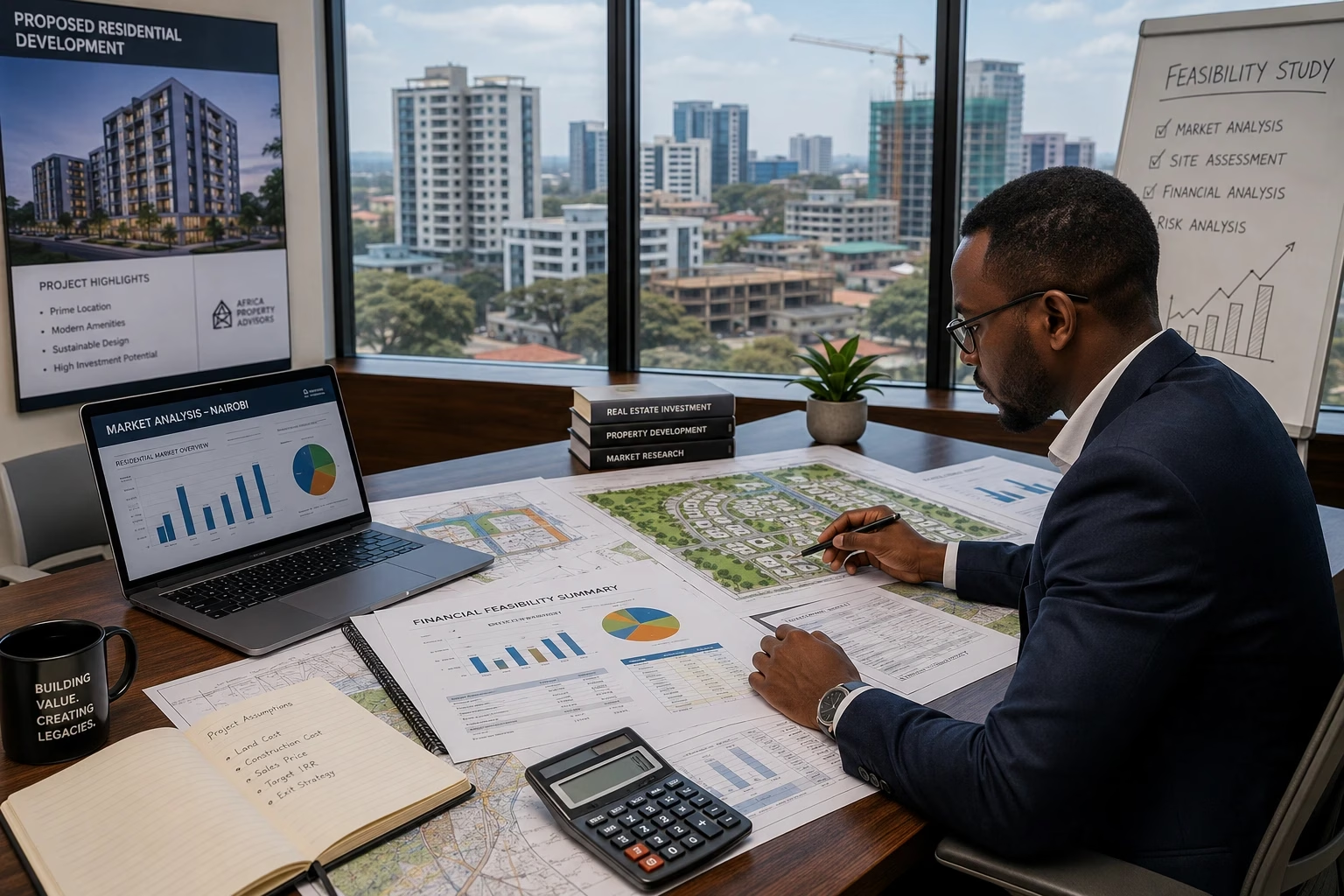
One of the key questions investors want answered is whether the proposed project can generate an acceptable return on investment.
A feasibility study evaluates the relationship between the anticipated investment and potential revenue or income generated by the project.
Depending on the nature of the assignment, the financial assessment may consider factors such as:
- Projected revenue
- Development costs
- Operating expenses
- Cash flow
- Profitability
- Rental income
- Selling prices
- Investment returns
- Development timelines
- Potential payback period
The objective is not simply to produce an attractive financial projection. It is to provide investors with a realistic understanding of the project’s potential financial performance based on the assumptions and market conditions available at the time of the assessment.
Where appropriate, different development scenarios can also be considered to determine how changes in costs, prices, demand or other assumptions could affect the project’s potential returns.
Our Feasibility Study Services
At GIMCO Limited, we provide comprehensive feasibility studies in Kenya for a wide range of real estate developments.
Each project is assessed based on its location, proposed use, target market, investment requirements, development costs, potential revenue and associated risks.
Our approach is tailored to the specific characteristics of each project. Whether you are planning a residential development, commercial property, industrial facility, mixed-use project or specialized development, our feasibility assessment helps you understand the opportunity before committing significant capital.
Residential Developments
Residential developments require a clear understanding of housing demand, buyer and tenant preferences, affordability and competition within the target location.
Our feasibility studies cover projects such as apartments, townhouses, maisonettes, gated communities, affordable housing developments, student accommodation and serviced apartments.
We assess demand for different unit types, achievable selling prices or rental rates, preferred amenities, occupancy expectations and competing residential developments.
We also consider the site’s accessibility and proximity to employment centres, schools, shopping facilities, transport links and other amenities.
This analysis helps developers determine whether the proposed residential concept is aligned with market requirements. It can also highlight opportunities to adjust the unit mix, pricing or development strategy.
Commercial Developments
Commercial property requires careful assessment of business demand, tenant requirements, rental levels and competition within the target market.
GIMCO conducts feasibility assessments for office buildings, retail centres, shopping facilities, business parks, commercial complexes and other income-generating properties.
The assessment may examine demand for commercial space, existing and planned competing developments, prevailing rental rates, occupancy levels and potential tenant profiles.
For office developments, we can assess demand for different office sizes and specifications, likely tenant groups and achievable rental levels.
For retail developments, the analysis may consider customer catchment areas, accessibility, surrounding population, purchasing patterns and competing retail facilities.
This helps investors understand whether the proposed commercial project can respond to market demand and generate sustainable income.
Industrial Projects
Industrial developments require different considerations from residential and commercial property.
Location, accessibility, infrastructure, transport connectivity, land availability and proximity to key markets can significantly influence the viability of an industrial project.
Our feasibility studies can assess warehouses, logistics facilities, industrial buildings, distribution centres, storage facilities and other industrial developments.
We examine factors such as vehicle accessibility, proximity to major roads and transport networks, availability of utilities and surrounding land uses.
The assessment can also consider competing industrial properties, prevailing rental rates, potential tenant requirements and development costs.
For investors considering industrial property as an income-generating asset, this analysis provides insight into potential demand, rental income and project risks.
Mixed-Use Developments
Mixed-use developments combine two or more property uses within the same project. These may include residential apartments, offices, retail space, hospitality facilities and other commercial uses.
Because these projects involve multiple components, they require a comprehensive assessment to determine whether the different uses can work together commercially.
Our analysis may examine demand for each component, the appropriate allocation of space, potential rental or sales income, development costs and competition.
For example, a mixed-use development may include apartments above retail and office space.
The feasibility study can assess whether there is sufficient demand for each component and whether the combined development presents a stronger opportunity than a single-use project.
Where appropriate, we can also evaluate different development scenarios, allowing investors to compare alternative concepts before making a final decision.
Specialized Projects
Some real estate developments have unique requirements and cannot be assessed using a standard residential or commercial property model.
Our specialized feasibility studies can cover projects such as hotels, serviced apartments, educational facilities, healthcare developments, institutional projects, recreational facilities and other specialized developments.
The assessment considers the specific factors that influence the proposed project.
For a hospitality development, for example, this may include visitor demand, competing hotels, room rates, occupancy levels, location and operating considerations.
For educational or healthcare developments, the analysis may consider population characteristics, demand for services, accessibility, competition and the suitability of the proposed site.
The objective is to ensure that the feasibility assessment reflects the unique requirements of the proposed development rather than relying on generic assumptions.
A Tailored Approach to Every Project
Every property development is different. A project that performs well in one location may not produce the same results in another.
For this reason, GIMCO’s feasibility studies in Kenya are tailored to the specific project, location and investment objectives.
We consider market conditions, the development concept, financial requirements, potential revenue and risks relevant to each assignment.
Our objective is to provide investors and developers with practical information to help them determine whether to proceed, modify the proposed project, consider an alternative development concept or reassess the investment opportunity.
Planning a residential, commercial, industrial, mixed-use or specialized development in Kenya? Contact GIMCO Limited to discuss your project and request a professional feasibility study.

Location Analysis
Location can have a significant impact on the success of a real estate project. A strong development concept may still struggle if the site does not offer the accessibility, infrastructure or surrounding amenities required by the target market.
Land due diligence is another important part of a feasibility study. Before proceeding with a proposed development, investors should investigate land ownership, title information, restrictions, planning considerations and other factors that could affect the project. The Ardhisasa platform provides access to government land information and services, including land registration, physical planning, survey and mapping, valuation and other land-related processes.
As part of our feasibility studies in Kenya, GIMCO evaluates the location of a proposed development and its surrounding environment. We consider factors such as:
- Accessibility and Roads: Proximity to major roads, highways and alternative routes.
- Public Transport: Availability of matatus, buses, rail services and other transport options.
- Commercial Centres: Access to business districts, markets and commercial areas.
- Schools and Hospitals: Proximity to educational institutions and healthcare facilities.
- Shopping Centres: Availability of malls, supermarkets and other retail facilities.
- Employment Centres: Distance from major business and employment hubs.
- Infrastructure: Quality and availability of roads, drainage and other supporting infrastructure.
- Utilities: Access to electricity, water, sewerage, telecommunications and other essential services.
- Security: General security conditions and factors that may influence the attractiveness of the location.
- Planned Developments: Proposed infrastructure, residential, commercial and public developments that could affect future demand and property values.
This analysis helps determine whether the proposed location is suitable for the intended development and target market. It can also identify location advantages, potential challenges and future opportunities that may influence the project’s commercial viability.
A well-chosen location can strengthen demand, improve marketability and support long-term property performance. GIMCO’s location analysis provides investors with practical insights before they commit significant capital to a development project.

Market Feasibility
Market analysis is one of the most important components of a real estate feasibility study. A project may have a suitable site and an attractive development concept, but its success ultimately depends on whether there is sufficient demand for the finished property.
At GIMCO Limited, our feasibility studies in Kenya examine the market conditions surrounding a proposed development. We assess current demand, potential customers, competition, pricing and emerging trends to help investors understand the commercial opportunity.
Existing Market Demand
We assess the current demand for the type of property being proposed and determine whether the market can support additional supply.
For residential projects, this may include demand for apartments, maisonettes, townhouses or serviced apartments. For commercial projects, we may assess demand for offices, retail units, warehouses and other commercial spaces.
Understanding existing demand helps investors avoid developing properties in markets where supply may already exceed demand.
Target Customers
A successful development needs a clearly defined target market. We help identify the people or businesses most likely to purchase, rent or use the proposed property.
Depending on the project, the target customers could include homeowners, tenants, businesses, retailers, corporate organisations, students, tourists or other specific user groups.
Understanding the target customer helps inform decisions about property design, unit sizes, amenities, pricing and marketing.
Demographics
Demographic characteristics can significantly influence property demand. Our assessment may consider factors such as population size, population growth, household characteristics, age groups, employment patterns and the concentration of potential customers within the catchment area.
These factors help establish whether the surrounding population provides a suitable market for the proposed development.
Income Levels and Affordability
The purchasing power of the target market is an important consideration when determining achievable property prices and rental rates.
We assess income characteristics and affordability within the relevant market to help determine whether the proposed property is appropriately positioned.
For residential developments, this can help establish whether the market is more suitable for affordable, mid-market or premium housing. For commercial property, it can help inform rental expectations and potential tenant profiles.
Consumer Preferences
Property users have different expectations depending on their needs, lifestyle and budget.
Our market assessment considers preferences such as unit sizes, property layouts, amenities, parking, security, accessibility, location and other features that may influence purchasing or rental decisions.
Understanding these preferences can help developers design properties that are more closely aligned with actual market requirements.
Market Trends
Real estate markets continually change due to economic conditions, infrastructure development, population growth, changes in consumer behaviour and other factors.
We examine relevant market trends to identify developments that could influence the proposed project.
This may include changes in property prices, rental rates, demand patterns, new infrastructure, emerging locations and shifts in buyer or tenant preferences.
Understanding these trends can help investors assess whether an opportunity is likely to remain relevant throughout the development and investment period.
Competitor Analysis
Competition is another important consideration when assessing market feasibility.
We examine existing and planned developments that could compete with the proposed project. This may include comparing their location, pricing, unit sizes, amenities, occupancy, target customers and overall market positioning.
The findings can help identify how the proposed development could differentiate itself and compete effectively.
Rental and Selling Prices
Realistic pricing is essential to the financial viability of a property project.
We assess prevailing rental and selling prices for comparable properties within the relevant market. This provides a basis for developing realistic revenue assumptions.
The analysis can also highlight differences in pricing between locations, property types, sizes, specifications and amenities.
Rather than relying solely on estimated figures, investors can use market evidence to develop more informed financial projections.
Occupancy and Absorption
For income-generating developments, occupancy levels can have a significant impact on financial performance.
We assess available information on occupancy, vacancy and the rate at which comparable properties are being absorbed by the market.
For properties intended for sale, absorption analysis can help estimate how quickly units may potentially be sold. For rental developments, it can provide insight into potential occupancy and the time required to attract tenants.
Identifying Market Gaps
One of the most valuable outcomes of market feasibility analysis is identifying gaps within the market.
A market gap may exist where there is insufficient supply of a particular property type, price range, unit configuration or service within a specific location.
For example, research may identify strong demand for affordable apartments, modern office space, quality warehousing or professionally managed rental properties where existing supply is limited.
Identifying such opportunities can help developers create projects that respond to genuine market needs rather than simply adding more supply to an already saturated market.
Turning Market Research into Investment Insight
Market feasibility brings these different factors together to provide a clearer understanding of the commercial environment surrounding a proposed development.
By analysing market demand, target customers, demographics, income levels, consumer preferences, trends, competition, pricing, occupancy and market gaps, investors can make more informed decisions about what to develop, where to develop it and how to position the project.
At GIMCO Limited, we use market analysis as an important part of our feasibility studies in Kenya, helping property investors and developers evaluate opportunities before committing significant capital.
Planning a real estate development in Kenya? Contact GIMCO Limited for a professional feasibility assessment tailored to your proposed project and location.
Development Concept Assessment
A successful real estate project needs to match both the site and the market. GIMCO assesses whether the proposed development concept is appropriate for the location, target customers and available resources.
Depending on the property, we may assess concepts such as:
- Apartments – unit types, sizes, amenities and target market.
- Offices – office specifications, tenant demand and potential rental levels.
- Retail – customer catchment, accessibility and demand for retail space.
- Warehouses – location suitability, access and demand from businesses.
- Hotels – visitor demand, competition, room rates and occupancy potential.
- Mixed-Use Projects – suitability of combining residential, commercial, retail or hospitality uses.
Where necessary, we also compare alternative development scenarios to determine which option offers the strongest potential based on market demand, development costs, revenue and investment objectives.
This helps investors avoid committing to a development concept simply because it appears attractive and instead choose an option supported by market and financial evidence.
Development Cost Assessment
Understanding the full cost of a development is essential when determining its viability.
GIMCO assesses the major costs associated with a proposed project, including:
- Land: Acquisition and associated land costs.
- Construction: Building and site development costs.
- Infrastructure: Roads, drainage, utilities and other supporting works.
- Professional Consultants: Architectural, engineering, valuation and other consultancy fees.
- Approvals: Relevant statutory and regulatory costs.
- Financing: Interest and other financing-related expenses.
- Marketing: Sales, advertising and promotional costs.
- Project Management: Costs associated with coordinating and managing the development.
- Contingencies: Allowances for unforeseen project expenses.
This provides investors with a clearer estimate of the capital required and helps identify costs that could affect the project’s profitability.

Revenue and Income Analysis
A project’s financial viability depends not only on controlling costs but also on its ability to generate sufficient revenue or income.
GIMCO assesses potential income based on the proposed development and prevailing market conditions. This may include:
- Property Sales: Potential revenue from selling residential or commercial units.
- Rental Income: Expected income from residential and other rental properties.
- Office Leases: Potential rental income from commercial office space.
- Retail Leases: Income generated from shops and retail units.
- Hospitality: Revenue potential from hotels and related facilities.
- Serviced Accommodation: Potential income from serviced apartments and similar properties.
- Industrial Property: Rental or sales income from warehouses, industrial units and logistics facilities.
Revenue assumptions are compared with current market prices, rental rates, demand and competition to ensure that financial projections are realistic.
This helps investors develop a clearer understanding of the project’s potential income, cash flow and overall financial performance.
Financial Feasibility
Financial feasibility is a critical part of a real estate feasibility study. It helps determine whether a proposed project is financially viable and whether the expected returns justify the capital, time and risks involved.
GIMCO evaluates the project’s expected investment requirements, costs, revenue and financial performance using realistic assumptions based on the proposed development and prevailing market conditions.
Our assessment considers key costs such as land acquisition, construction, professional fees, statutory approvals, financing, marketing and ongoing operating expenses. We also examine how these costs may affect the total capital required to complete the project.
On the income side, we assess potential sales revenue, rental income and other project-specific income streams. These projections help establish the potential cash flow and financial performance of the development.
Where appropriate, we can assess different development scenarios to understand how changes in costs, selling prices, rental rates, occupancy or market demand could affect the project’s outcome.
The financial analysis may consider:
- Total Development Cost – The estimated capital required to complete the project.
- Revenue Projections – Potential income from property sales, rentals or other sources.
- Cash Flow – How money is expected to move into and out of the project over its development and operating period.
- Profitability – The potential profit generated after accounting for project costs.
- Investment Returns – The potential return relative to the capital invested.
- Financial Risks – Factors such as cost increases, lower sales or rental income, financing costs and market changes.
The objective is to give investors a clearer financial picture of the proposed development and help them determine whether to proceed, modify the project or consider an alternative investment strategy.
Who Needs Feasibility Studies in Kenya?
Feasibility studies can benefit anyone considering a significant property development or investment. GIMCO provides independent analysis to help different types of clients understand opportunities, costs, risks and potential returns before making major financial commitments.
Property Developers
Determine whether a proposed development is commercially and financially viable before committing to construction.
Real Estate Investors
Evaluate potential returns, investment requirements and risks before committing capital to a property project.
Landowners
Explore the most suitable and potentially viable development options for their land based on market demand and location.
Businesses
Assess proposed offices, warehouses, commercial facilities and other property developments before investing in them.
Institutional Investors
Evaluate large-scale property development opportunities using market research, financial analysis and risk assessment.
Diaspora Investors
Access independent property investment information and feasibility analysis when making development decisions remotely from outside Kenya.
Feasibility Studies and Property Valuation
A feasibility study and a property valuation serve different purposes, although both can play an important role in property investment decisions.
Property valuation determines the market value of a property for a specific purpose, while a feasibility study evaluates whether a proposed development or investment is commercially and financially viable.
For example, an investor acquiring land for development may need to understand both the current value of the land and whether the proposed development is likely to be viable.
These two assessments can therefore provide complementary information when making property investment decisions.
Learn more about GIMCO’s property valuation services →
Key Factors We Assess
A feasibility study brings together several factors that can influence the success of a property project. GIMCO evaluates these areas to provide a clearer picture of the proposed investment.
Market Demand
Is there sufficient demand for the proposed development?
We assess the target market, demand levels, customer preferences and relevant market trends.
Competition
What similar developments already exist?
We examine competing properties, their pricing, positioning, occupancy and market performance.
Location
Does the location support the proposed project?
We assess accessibility, infrastructure, amenities, surrounding developments and other location factors.
Development Costs
How much capital is required?
We assess land, construction, professional fees, approvals, financing and other development costs.
Revenue
What income can potentially be generated?
We analyse potential sales revenue, rental income and other project-specific income streams.
Financing
What funding requirements exist?
We consider the capital required and financial factors that may influence project funding.
Returns
Does the project offer acceptable potential returns?
We evaluate projected profitability, cash flow and potential investment returns.
Risk
What could negatively affect performance?
We identify market, financial, development and other risks that could influence the project’s outcome.
Our Feasibility Study Process
GIMCO follows a structured process to evaluate the viability of proposed property developments. The exact scope may vary depending on the project, location and client’s requirements.
01 — Understand the Project
We begin by understanding your objectives, proposed development, site and target market.
02 — Gather Information
We collect relevant property, market, development and financial information required for the assessment.
03 — Conduct Market Research
We assess market demand, competition, pricing, customer preferences and relevant market trends.
04 — Financial Analysis
We evaluate development costs, potential revenue, cash flow, profitability and potential investment returns.
05 — Assess Risks
We identify factors that could affect the project’s commercial and financial performance.
06 — Prepare the Report
We present our findings, analysis and recommendations in a structured feasibility report to support your investment decision.
Why Choose GIMCO for Feasibility Studies in Kenya?
GIMCO Limited provides professional real estate consultancy services in Kenya, helping investors and developers make informed property decisions based on market research, financial analysis and project-specific consideration
Decades of Experience
Benefit from GIMCO’s extensive experience in the Kenyan real estate and property consultancy sector.
Data-Driven Insights
Our assessments are supported by market research, financial analysis and relevant property information.
Regional Reach
We have experience assessing property opportunities across different locations and markets in Kenya.
Customized Reports
Each feasibility study is tailored to the specific development, location, objectives and requirements of the client.
Holistic Approach
We consider the market, location, development costs, revenue potential, financing and risks rather than evaluating one factor in isolation.
Why Choose Gimco for Feasibility Studies?
- Decades of Experience – Trusted real estate consultancy since 1985.
- Data-Driven Insights – Research-based recommendations that guide sound investment decisions.
- Regional Reach – Operations across East and Central Africa with local market expertise.
- Customized Reports – Tailored studies to match your project goals and budget.
- Holistic Approach – Incorporating property management, facility management, and co-working space dynamics into assessments.
Deliverables You Can Expect
When you commission a feasibility study with Gimco Ltd, you receive:
- A detailed written report with financial projections and market analysis.
- Scenario modeling for different investment options.
- Actionable recommendations for project success.
- Presentation support for stakeholders and financing partners.
Frequently Asked Questions About Feasibility Studies in Kenya
What is a feasibility study in Kenya?
A feasibility study in Kenya is a detailed assessment of a proposed property development or investment to determine whether it is commercially and financially viable. It typically examines the market, location, development costs, potential revenue, investment requirements, returns and risks.
Why do I need a feasibility study before developing property?
A feasibility study helps you understand the potential opportunities and challenges before committing significant capital. It can help determine whether your proposed development is suitable for the location and market, identify potential risks and highlight changes that could improve the project’s viability.
What does a real estate feasibility study include?
A real estate feasibility study may include market research, location analysis, development concept assessment, competition analysis, development cost assessment and financial modelling. It can also evaluate potential sales revenue or rental income, cash flow, profitability, investment returns and project risks.
Who needs feasibility studies in Kenya?
Feasibility studies can benefit property developers, real estate investors, landowners, businesses, institutional investors and diaspora investors. They are particularly useful for anyone considering a significant property development or investment and who needs reliable information before committing capital.
Does GIMCO conduct commercial property feasibility studies?
Yes. GIMCO can assess commercial development opportunities such as office buildings, retail centres, commercial complexes and other income-generating properties. The assessment can consider market demand, competition, rental levels, occupancy, development costs and potential income.
Can a feasibility study help me decide what to develop on my land?
Yes. A feasibility study can compare different development options based on the site’s characteristics, market demand, development costs, potential revenue and investment objectives. For example, alternative uses such as apartments, offices, retail, warehouses or mixed-use development can be assessed where appropriate.
How long does a feasibility study take?
The timeframe depends on the size, complexity, location and scope of the project. Projects requiring extensive market research, financial modelling or assessment of multiple development scenarios may require more time. GIMCO can advise on the expected timeframe after understanding your project requirements.
How much does a feasibility study cost in Kenya?
The cost varies depending on the type, size, location and complexity of the proposed project and the scope of analysis required. Rather than applying one standard fee to every project, GIMCO can assess your requirements and provide a quotation based on the specific assignment.
Can GIMCO help investors living outside Kenya?
Yes. GIMCO can provide professional property consultancy and feasibility assessment for investors who are considering property opportunities in Kenya from abroad. A feasibility study can provide independent market and financial information to support investment decisions when the investor cannot personally conduct all the necessary research.
Should I conduct a property valuation and feasibility study?
They serve different purposes and may be useful together. A property valuation assesses the value of a property for a specific purpose, while a feasibility study evaluates whether a proposed development or investment is commercially and financially viable. Depending on your project, conducting both assessments can provide a more complete understanding of the investment opportunity.
What is a feasibility study in Kenya?
A feasibility study in Kenya is a detailed assessment of a proposed property development or investment to determine whether it is commercially and financially viable. It typically examines the market, location, development costs, potential revenue, investment requirements, returns and risks.
Why do I need a feasibility study before developing property?
A feasibility study helps you understand the potential opportunities and challenges before committing significant capital. It can help determine whether your proposed development is suitable for the location and market, identify potential risks and highlight changes that could improve the project’s viability.
What does a real estate feasibility study include?
A real estate feasibility study may include market research, location analysis, development concept assessment, competition analysis, development cost assessment and financial modelling. It can also evaluate potential sales revenue or rental income, cash flow, profitability, investment returns and project risks.
Who needs feasibility studies in Kenya?
Feasibility studies can benefit property developers, real estate investors, landowners, businesses, institutional investors and diaspora investors. They are particularly useful for anyone considering a significant property development or investment and who needs reliable information before committing capital.
Does GIMCO conduct commercial property feasibility studies?
Yes. GIMCO can assess commercial development opportunities such as office buildings, retail centres, commercial complexes and other income-generating properties. The assessment can consider market demand, competition, rental levels, occupancy, development costs and potential income.
Can a feasibility study help me decide what to develop on my land?
Yes. A feasibility study can compare different development options based on the site’s characteristics, market demand, development costs, potential revenue and investment objectives. Alternative uses such as apartments, offices, retail, warehouses or mixed-use development can be assessed where appropriate.
How long does a feasibility study take?
The timeframe depends on the size, complexity, location and scope of the project. Projects requiring extensive market research, financial modelling or assessment of multiple development scenarios may require more time. GIMCO can advise on the expected timeframe after understanding your project requirements.
How much does a feasibility study cost in Kenya?
The cost varies depending on the type, size, location and complexity of the proposed project and the scope of analysis required. GIMCO can assess your requirements and provide a quotation based on the specific assignment.
Can GIMCO help investors living outside Kenya?
Yes. GIMCO can provide professional property consultancy and feasibility assessment for investors considering property opportunities in Kenya from abroad. A feasibility study can provide independent market and financial information to support investment decisions when the investor cannot personally conduct all the necessary research.
Should I conduct a property valuation and feasibility study?
They serve different purposes and may be useful together. A property valuation assesses the value of a property for a specific purpose, while a feasibility study evaluates whether a proposed development or investment is commercially and financially viable. Depending on your project, conducting both assessments can provide a more complete understanding of the investment opportunity.
Gimco’s feasibility study gave us the clarity we needed before investing. Their detailed market analysis and financial projections helped us secure financing with confidence.
⭐⭐⭐⭐⭐
We engaged Gimco Ltd for a feasibility study on a mixed-use development. The report was thorough, practical, and highlighted risks we hadn’t considered. Their insights saved us time and money.
⭐⭐⭐⭐⭐
The team at Gimco went beyond numbers—they provided actionable recommendations that guided our housing project in Nakuru. Their professionalism and expertise are unmatched.
⭐⭐⭐⭐⭐
For our industrial development, Gimco’s feasibility study identified market gaps and helped us design a more profitable strategy. Their experience in East Africa is invaluable.
⭐⭐⭐⭐⭐
Gimco’s research-based approach and 40 years of experience gave us confidence to move forward with our co-working space project. Their report was precise, timely, and insightful.
⭐⭐⭐⭐⭐
Contact Us
Looking to invest in real estate but unsure of the risks and returns? Let Gimco Ltd provide you with the clarity and confidence you need.
📍 Visit us at Gimco Centre, Upper Hill, Nairobi
🌐 www.gimcoltd.com
📞 +254 020 2719800
Ready to Evaluate Your Real Estate Project?
Before committing your capital, get professional insight into your project’s market potential, financial viability and risks.
